
COMMANDO STANDARD NUTRITION
For the Commando Standard, we will touch on the fundamentals of how to best fuel yourself for the course.
Simply put, the better the quality and balance of your nutrition - the better you will feel and function.
We suggest you have a basic understanding of these elements to get the most from the course - but bear in mind that your primary focus should go into the the application of the training plan.
If you seek to make changes, do so one at a time. Make small, progressive improvements rather than big leaps for perfection. Focus on long-term benefit as opposed to a big upheaval that lasts a week.

CALORIES AND METABOLISM
A food calorie is a unit of energy - you consume calories by eating and expend calories through exercise.
In other words, and simply put:
- If you consume more calories than you burn off, you put on weight.
- If you burn off more calories than you consume, you lose your weight.
- If you roughly level your consumption and expenditure of calories, you stay the same weight.
For those that also care about our health, how our bodies function and how awesome we are in other areas of our life, we need to care about our metabolism.
Metabolism is essentially the sum of the reactions that occur to keep our body functioning.
You are made up of trillions of cells that carry out these tasks for us whilst we concern ourselves with other things.
Cells need nourishment to thrive. The Commando Standard will have you expending a substantial amount of calories. You will want to ensure you are eating an adequate amount to fuel the sessions and have your body functioning to its best.
PROTEIN
WHAT DOES PROTEIN DO?
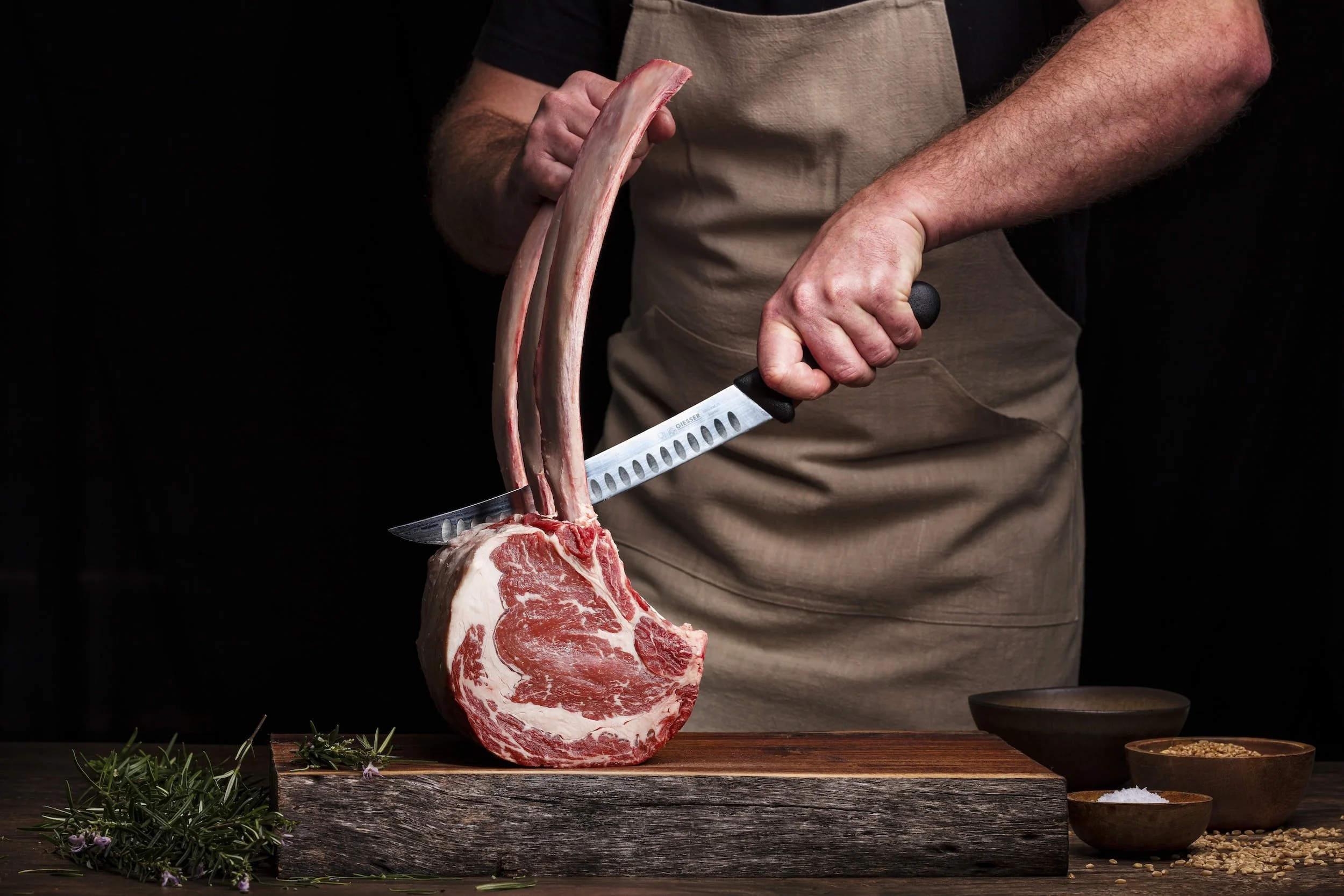
Protein helps build and repair muscle tissue as well as provide us with the means to carry out many of the functions in our body. Without sufficient protein, we inhibit how many components of the body are built, including hormones, enzymes, blood, and bone. So everything from healing to regulating our body is greatly dictated by protein.
When training, you are breaking your body down, so protein is the first step to building you back up stronger.
Your focus is best directed in getting a good source of protein spread throughout the day (it is easier for your body to digest and absorb this way) and considered in all of your meals.
WHERE CAN YOU FIND PROTEIN?
The 'go-to' options tend to come from animal products. However, it doesn't just have to come from red meat, poultry, eggs, fish or dairy. Though these sources often pack the most per mouthful.
Lentils, Halloumi, Tofu, Oats, Nuts, Yoghurts Beans and even some vegetables.
Typically a source of protein would be an item that contains more than 8g of protein per 100g of ingredient. Variety is ideal!
HOW MUCH PROTEIN SHOULD YOU EAT?
Generally speaking, you would be looking to have 1-2 palm-sized portions of protein with each of your meals. At the very least you would want 0.8g per kilogram of body weight, though for those that do hard training like the Commando Standard, you would need more (approx 1.5 - 2g per kilogram of bodyweight)
CARBOHYDRATES
WHAT DO CARBS DO?
Carbohydrates are your body's number one, preferred option for energy. (fat is the second, and protein is the third.)
If we want to perform at our best and with intent - we need a source of carbohydrate to provide us with the energy to do so. So for the Commando Standard, we want carbohydrate ready and available.
This isn't just energy for exercise - but our daily energy levels too. That mid-morning crash - or the sluggish feeling you get late in the afternoon, could be due to your carbohydrate choices.
ENERGY THROUGHOUT THE DAY
When you eat a carbohydrate, your body breaks it down into sugar. This raises the level of sugar in your blood. When this level is raised, you get a nice boost of energy and your body produces a hormone called insulin to store the sugar/carb so that it reduces its presence within the blood and can be recruited to be used for energy.
We are going to break carbohydrates into two categories, simple and complex.
Simple carbohydrates are easy for your body to breakdown and therefore give a short burst of energy. You feel good and have a great 'boost'. A big boost of energy requires a big release of insulin to store that high level of sugar, this means your energy levels can come down quickly and give the sensation of a ‘crash’ where you might feel sluggish.
Simple carbohydrates are often sweet, high sugar foods.
Complex carbohydrates take time for the body to breakdown. This means that the energy that the carbs provide, is released over a longer period. Having energy regulated and more readily available means you will typically feel better and still have enough to fuel activity (depending on its intensity). Because the blood sugar levels are raised gently, they don't get the big 'peak' that would trigger a huge release of insulin and put you in a sustained state of 'storing'. Aside from this, you will also be avoiding a big dip in blood sugar that will leave you low energy and tired.
Complex carbohydrates are typically found in vegetables, beans, and whole grains.
To identify if carbs are complex or simple, you can refer to a GI (Glycemic Index) Chart.
High GI foods are simple, Low GI foods are complex.
TIMING
Generally speaking - eating complex sources of carbohydrate throughout the day will be sufficient in giving us consistent energy levels to function well.
However, when you are training hard with The Commando Standard - you will deplete your carbohydrate stores post-workout you should seek to replenish them. This is a good time to eat simple carbohydrates as they will break through the deficit faster. They can also be useful before your workout so that your training will benefit from the big 'spike' in blood sugar.
QUANTITY
Generally speaking 40-60% of the total calories you consume should be made up of carbohydrates, with the majority of those coming from complex carbs. This would equate to approx a cupped handful of carbohydrates per meal, possibly 2 portions for a larger candidate. This doesn't include your colourful veg as, though they are carbohydrate, they only contain a negligible amount.

FAT
Dietary fat performs numerous duties in the body. The most notable benefits are as follows:
Absorbing certain (fat-soluble) vitamins and getting the most out of your food.
Keeps your joints healthy so that you are recovering well for exercise and able to move pain-free.
It helps in producing hormones that keep your body in a balanced condition.
It forms our brain and nervous system.
Looking after the health and quality of the cells that make up your body.
Providing energy, particularly for longer, steadier bouts of exercise or work.
Managing inflammation for recovery.
This makes fat essential to the program. If you are consciously eating better nutrition, you want your body to utilise it, and you want to produce hormones at a solid rate to keep your body functioning with balance.
WHERE TO GET YOUR FAT?
There are different types of fat
Saturated Fats - (Found in meat, coconut oil, butter)
Monounsaturated Fats - (Found in Avocado, nuts and olive oil)
Polyunsaturated Fats - (Omega 3 and 6 - Flax Seeds, Oily Fish)
You don't need to know the specifics of each one, but if you eat a variety of good quality whole food fat sources, you will be able to utilise the benefits of dietary fat.
The key fat to avoid are Trans fats. These are the processed, bastardised fats that are found in junk food and processed foods (often to increase shelf life). We want to mitigate these kinds of fats as, over time and frequent consumption, they can inflame the body and cause chronic issues and diseases.
Instead go for things such as:
Cold-pressed flax oil
Coconut oil
MCT oil
Cold-pressed extra virgin olive oil
Raw butter
Ghee
Avocado
Raw cacao butter
High-quality meats, dairy and eggs
Raw nuts and nut butters
Sustainably sourced salmon, sardines, krill oil
Quality Omega 3 fish oil
HOW MUCH SHOULD YOU EAT?
A good portion of fat is approximately the size of your thumb per meal. For bigger people, two to three portions would suffice.
This will make approx 20-30% of your total calories.
FATS AND ENERGY
Fat is the body's second resource for energy (after carbs). You may have heard of the ketogenic diet. This relies on you having low carbohydrate so that your body uses fat as its energy source. You don't need to worry about following this diet but it highlights the way that your body will respond differently based on the food you consume.
In terms of energy release, fat is the tortoise to carbohydrates hare.
If carbohydrates are available - your body will go to them for energy. This typically happens in high-intensity work in shorter, faster more explosive training (anaerobic)
Then fat kicks in (with over double the energy) when carbs are depleted and oxygen kicks in (aerobic training) It's slower to utilise, but if you keep under a certain threshold of exercise - fats can keep you going almost indefinitely. This will be useful in the case with some of your rucks and endurance runs.
Some will feel like they have more energy on higher fat, and others on higher carbohydrate. Most people will benefit from a balanced approach with each macronutrient in the portions we prescribe.

VEG
So we all know that fruit and vegetables are good for us! They are the 'go-to' food that people think about when they think of health.
VEG AND THE GUT
Veg is high in fibre - this supports the function of our gut. The gut is an incredibly nuanced system that can determine a great many factors of survival. Our immunity is largely determined by the gut as well as how we feel and think. It is pretty much a second brain! Now you can go into a great deal of detail on the gut alone - but the essential thing you need to know is that it breaks down your food, absorbs the nutrients so they can be utilised and then gets rid of the waste. A 'healthy' gut does this with minimal fuss and ensures that the waste product at the end is just that - waste.
We have all heard the term 'You are what you eat!' However, it is more accurate to say 'You are what you break down, absorb and utilise'
This is where fiber comes in. Fibre is the indigestible portion of a plant. It adds bulk to our food and acts as a tour guide for food around the digestive system - allowing it to break down more efficiently. Veg is a great way to get in a solid intake of fiber.
MICRONUTRIENTS
Colour is a great indicator of micronutrient presence. Deep, vivid colors can express densely packed nutrition.
Micronutrients are nutrients that are only required in trace amounts in order to be effective.
You might know these more commonly as vitamins and minerals. To be deficient in micronutrients is to compromise immunity and to allow key processes in the body to break down. This can lead to small, chronic and confusing health problems.
Micronutrients are available in many food sources - not just fruit and veg! However, most fruit and veg are dense in the vitamins and minerals we need to thrive. They are easy sources to cover a lot of bases.
Getting in a wide variety of different sources is going to be our best way to reduce deficiencies in micronutrients. If we just eat limited sources - we will only get the micronutrients that they have to offer.
PORTIONING VEG
You should aim to eat a fist sized portion of veg with each meal. Aim to get variation by opting for sources of different colours and check whats in season for the most nutrient-dense options.
IN SUMMARY
The better the quality and balance of nutrition, the better one will feel and function.
General rules that make up a balanced diet:
Ensure you eat enough calories to sustain your workouts.
Protein is essential for building and repairing muscle tissue. Aim for 1-2 palm-sized portions of protein per meal
Carbohydrates are the body's preferred source of energy. Aim for a 1-2 cupped handfuls of carbohydrates per meal.
Dietary fat is essential for proper bodily function. A good portion of fat is approximately 1-2 thumb sized portions per meal.
Eating vegetables provides essential vitamins, minerals, and fiber. Aim for 1 fist sized portions of veg per meal